The Lost Job Problem: How Missed Follow-Ups Hurt Revenue
Missed job follow-ups quietly cost pest control businesses revenue. Learn how better customer retention and a pest control CRM stop lost revenue fast.
How Missed Follow-Ups Quietly Drain Pest Control Revenue
Pest control businesses rarely lose revenue because of poor service. More often, the loss happens quietly, after the job is finished.
The technician completes the treatment. The customer seems happy. Everyone assumes the next visit will happen automatically. Then nothing happens.
No reminder. No follow-up. No rebooking.
Six months later, the customer calls another company.
This is the lost job problem. It is one of the most common and most expensive operational gaps in pest control businesses. And it is almost always caused by missed job follow-ups, inconsistent processes, or reliance on memory rather than systems.
The good news is that this problem is entirely preventable.
The Hidden Cost of Missed Job Follow-Ups
Most pest control services are not one-time jobs. They rely on repeat visits, scheduled treatments, compliance checks, and seasonal services.
When follow-ups are missed, businesses lose:
- Recurring treatment revenue;
- Annual service contracts;
- Warranty inspections;
- Termite monitoring visits;
- Preventative maintenance programs; and
- Customer lifetime value.
The impact compounds quickly. Missing just five follow-ups per week could mean:
- 5 missed services;
- 20 missed services per month; and
- 240 missed services per year.
Even at a modest service value, that becomes significant lost revenue.
And the worst part, these are customers you already won. No advertising spend. No sales effort. Just missed opportunities.
Why Follow-Ups Get Missed in Pest Control Businesses
Most pest control teams do not intentionally ignore follow-ups. They simply rely on manual systems that break under pressure.
Common causes include:
Paper-Based Scheduling
Technicians write "follow up in 3 months" on paperwork. The sheet gets filed. No one checks it again.
Calendar-Only Systems
Bookings exist, but there is no structured follow-up workflow. If someone forgets to create the next job, it never happens.
Memory-Based Processes
Office staff try to remember which customers are due. This works until the workload increases.
No Central Customer History
Without a proper pest control CRM, there is no visibility into:
- Last service date;
- Recommended follow-up interval;
- Treatment type;
- Contract status; and
- Customer notes.
This makes proactive scheduling almost impossible.
The Customer Retention Problem Most Businesses Miss
Acquiring new customers is expensive. Retaining existing ones is where real profitability lives.
When customer retention is strong:
- Marketing costs decrease.
- Revenue becomes predictable.
- Technician schedules stay full.
- Contracts increase.
- Business valuation improves.
Missed follow-ups break this entire cycle.
Customers assume you will contact them. When you do not, they assume:
- The service was not important.
- The company is disorganised.
- They are not valued.
- The treatment is no longer needed.
Eventually, they choose another provider who consistently follows up.
Real-World Example: The Quarterly Treatment That Never Happened
A common scenario:
A technician completes a general pest treatment and recommends quarterly service.
They tell the customer, "We will see you in three months."
The office is busy. The follow-up is not scheduled. Three months pass. The customer notices ants again.
They search online and book another company.
The original business did everything right operationally, but still lost the customer due to a missed job follow-up.
Multiply this across dozens of customers, and the revenue impact becomes substantial.
How a Pest Control CRM Eliminates Lost Jobs
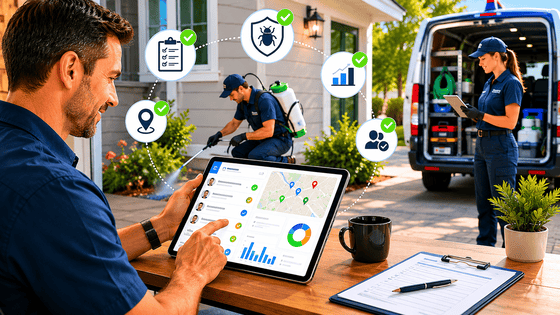
This is where a purpose-built pest control CRM transforms operations by automating follow-ups, reducing missed jobs, and boosting revenue.
A structured workflow includes:
Automatic Follow-Up Scheduling
When a job is completed, the next service is automatically created based on:
- Service type;
- Contract frequency;
- Treatment requirements; and
- Compliance rules.
No manual tracking required.
Recurring Service Management
Set customers to:
- Monthly service;
- Quarterly treatment;
- Annual inspection;
- Warranty follow-up; and
- Seasonal pest control.
The system handles the rest.
Reminder Notifications
Automated reminders ensure:
- Office staff know upcoming services.
- Technicians see scheduled follow-ups.
- Customers receive confirmations.
This dramatically improves customer retention.
Full Customer History
Every visit, note, and treatment is stored in one place:
- Previous pests treated;
- Chemical usage;
- Site conditions;
- Compliance records; and
- Recommended follow-ups.
This improves service quality and makes follow-ups more meaningful.
The Operational Benefits Go Beyond Revenue
Fixing the lost job problem does more than increase bookings.
It also improves:
Technician Productivity
Schedules stay full with less manual planning.
Compliance Tracking
Required inspections and follow-ups are never missed.
Customer Experience
Customers appreciate proactive service.
Business Forecasting
Recurring revenue becomes predictable.
Team Accountability
Managers can see which follow-ups are due or overdue.
These improvements compound over time, creating a more scalable business.
Warning Signs Your Business Has a Lost Job Problem
You may already be losing revenue if:
- Customers only call when pests return.
- Follow-ups are written in notes rather than scheduled.
- Repeat bookings depend on customer reminders.
- Technicians recommend services that never happen.
- Contracts are difficult to track.
- There is no recurring service workflow.
- Customer retention is inconsistent.
If any of these sound familiar, missed job follow-ups are likely costing your business.
Turning Missed Follow-Ups Into Predictable Revenue
The solution is not working harder. It is building a system that automatically captures every opportunity.
With the right workflow:
- Technician completes the job.
- Follow-up is automatically scheduled.
- Customer receives confirmation.
- A reminder is sent before the visit.
- Technician completes service.
- Next follow-up is created.
This creates a continuous service cycle that improves customer retention and eliminates lost revenue.
Over time, your business transitions from chasing jobs to managing recurring revenue.
Why Growing Pest Control Businesses Prioritise Follow-Ups
As pest control businesses grow, manual tracking becomes impossible. More customers mean more follow-ups, more contracts, and more complexity.
Without automation:
- Follow-ups get missed.
- Customers churn.
- Revenue fluctuates.
- Staff become overwhelmed.
With a structured pest control CRM, growth becomes manageable. Every job automatically leads to the next one.
That is how successful pest control companies build stable, scalable revenue.
Stop Letting Jobs Slip Through the Cracks
Missed follow-ups are silent revenue killers. They do not show up as complaints or cancellations. They simply disappear.
But with the right system, every completed job becomes the start of the next booking.
That means:
- Higher customer retention.
- More predictable revenue.
- Full technician schedules.
- Better customer experience.
- Less admin work.
The lost job problem is preventable. You just need the right workflow.
Start Capturing Every Follow-Up
If your team is still relying on memory, notes, or manual scheduling, you are likely losing valuable recurring work.
A dedicated pest control CRM ensures every follow-up is tracked, scheduled, and completed automatically, so your business stops leaking revenue and starts building predictable growth.
Start capturing every missed opportunity today.